Decorating Understated Doors
Whether an armoire or a front door, lighter wood tones can be used to create a striking architectural statement — think black dress with a ruby pendant.
A modest armoire crafted from pale vertical-grain Douglas fir plywood became the canvas for these sculptural vine cabinet pulls, finished in rich autumnal hot patinas. The warmth of the bronze, with layered reds, greens, and browns, brings depth and movement to the simplicity of the wood.
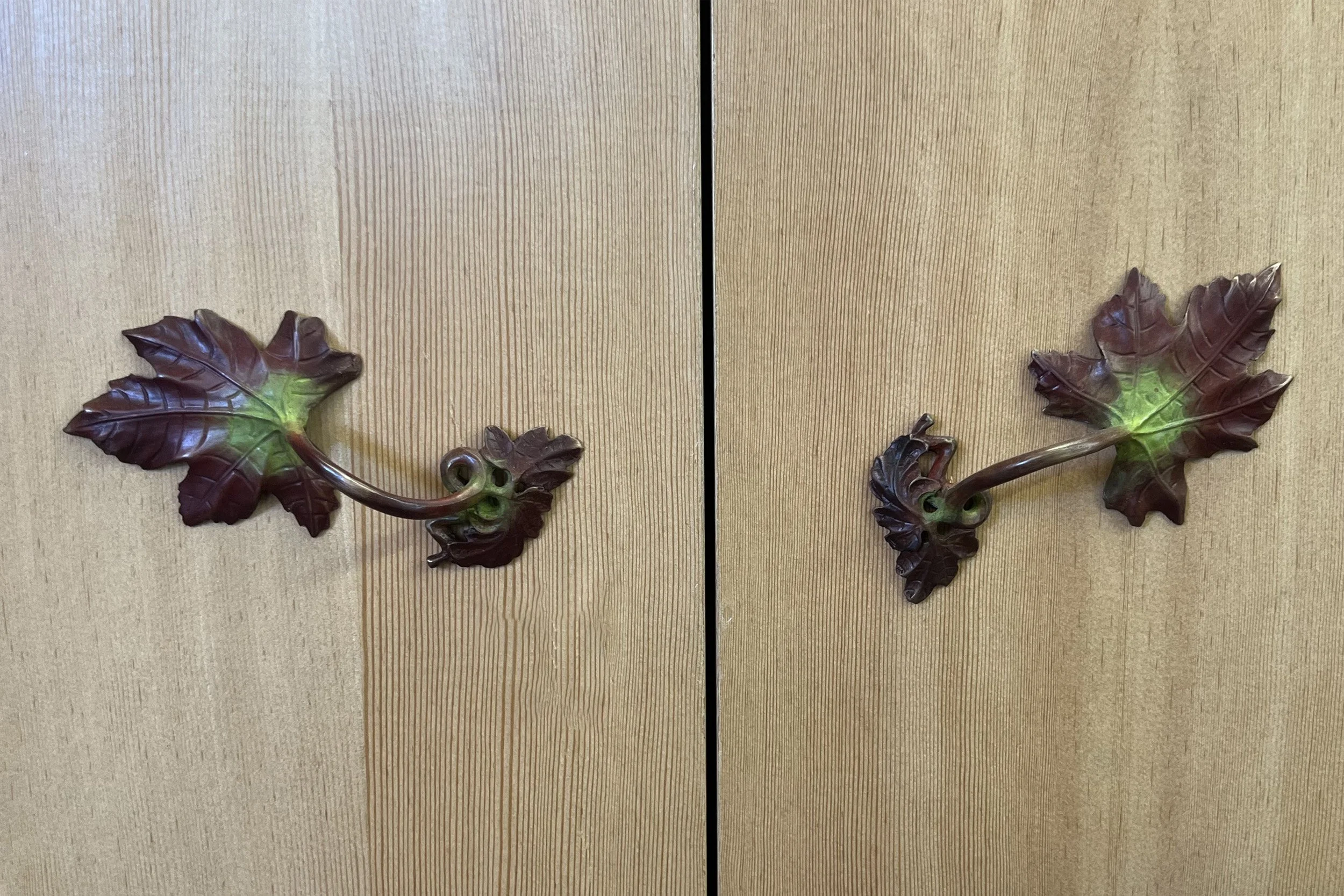
Bronze vine cabinet pull with torch-applied hot patina, revealing layered reds, greens, and oxidized depth across the leaf surface.
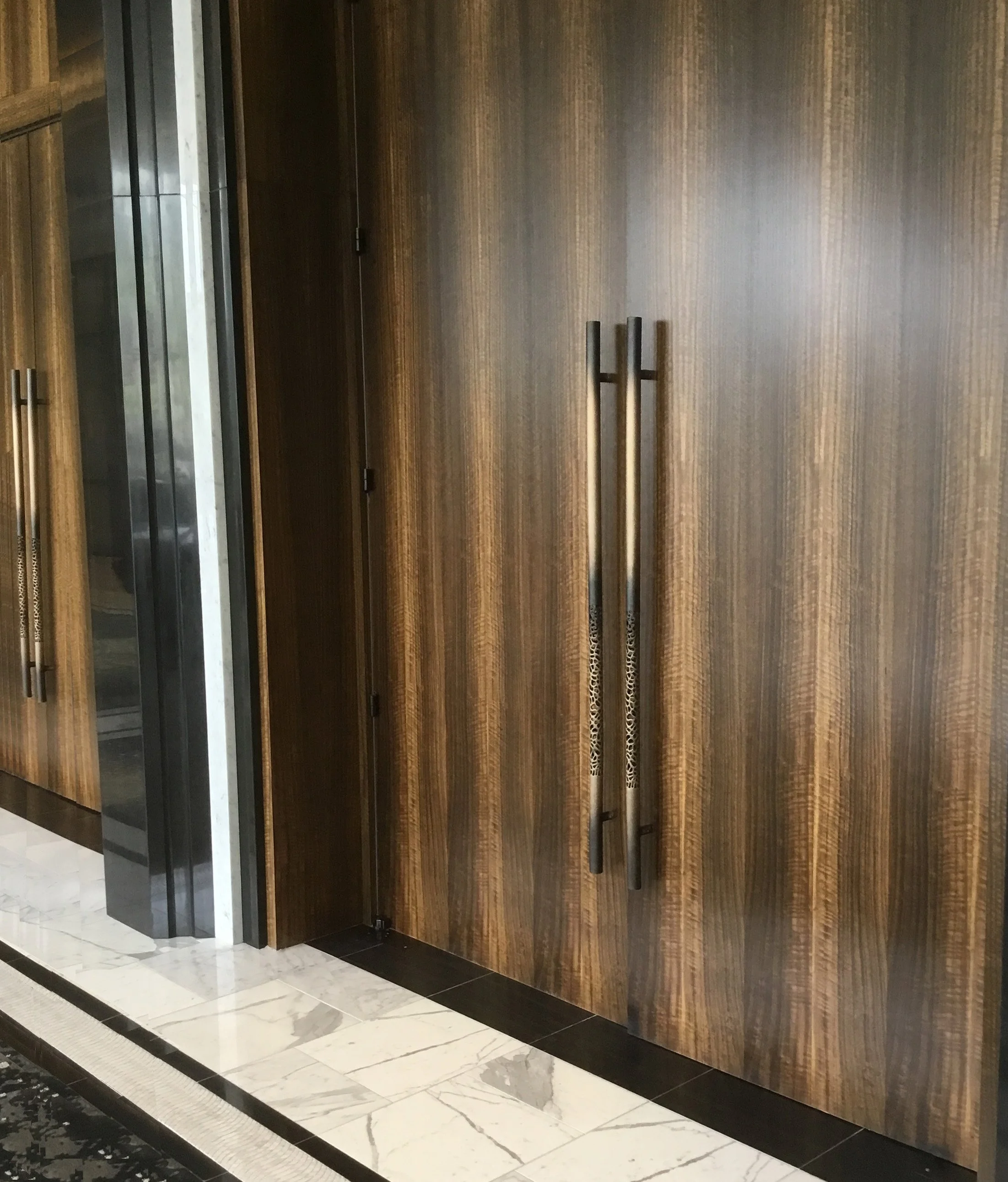
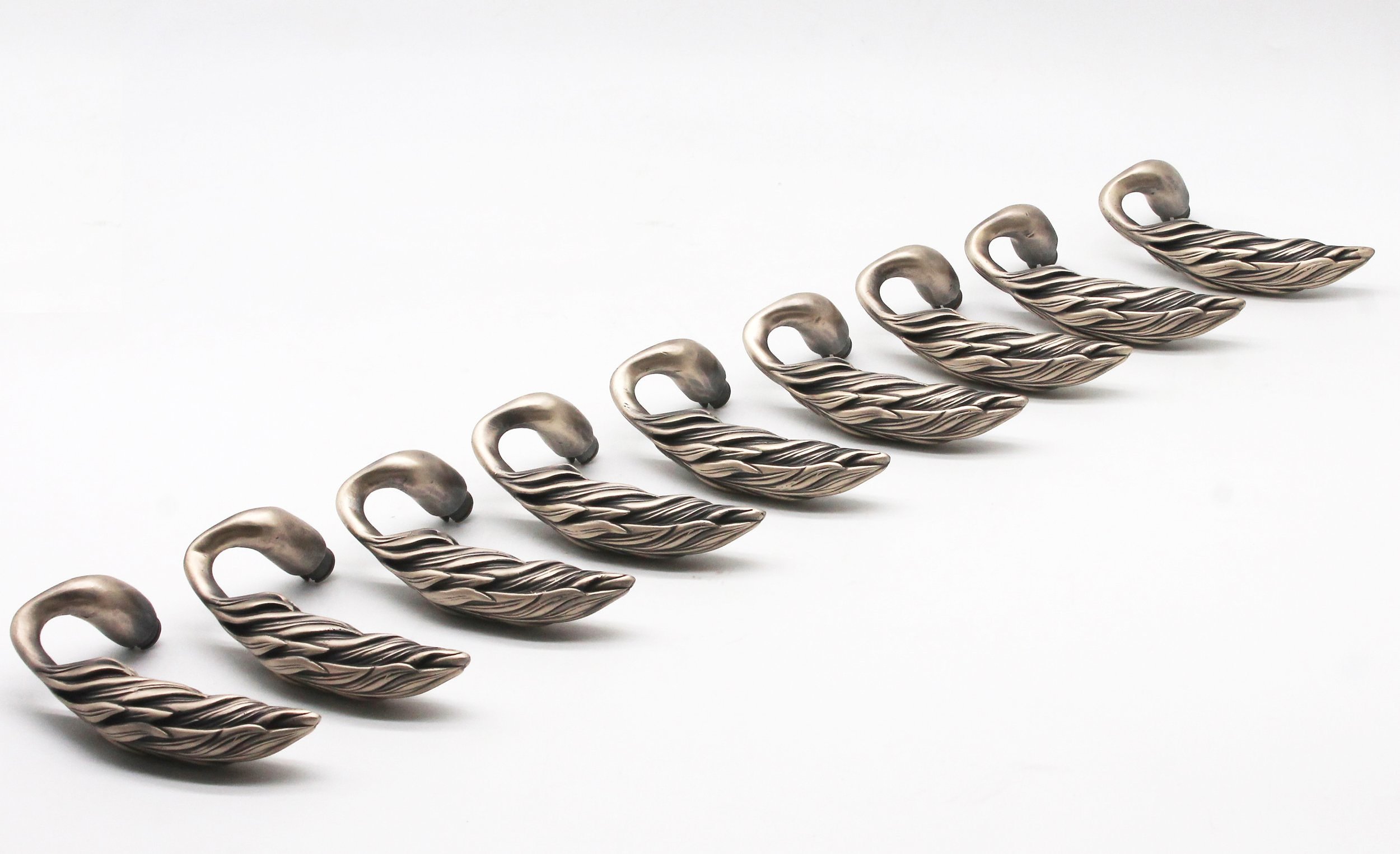
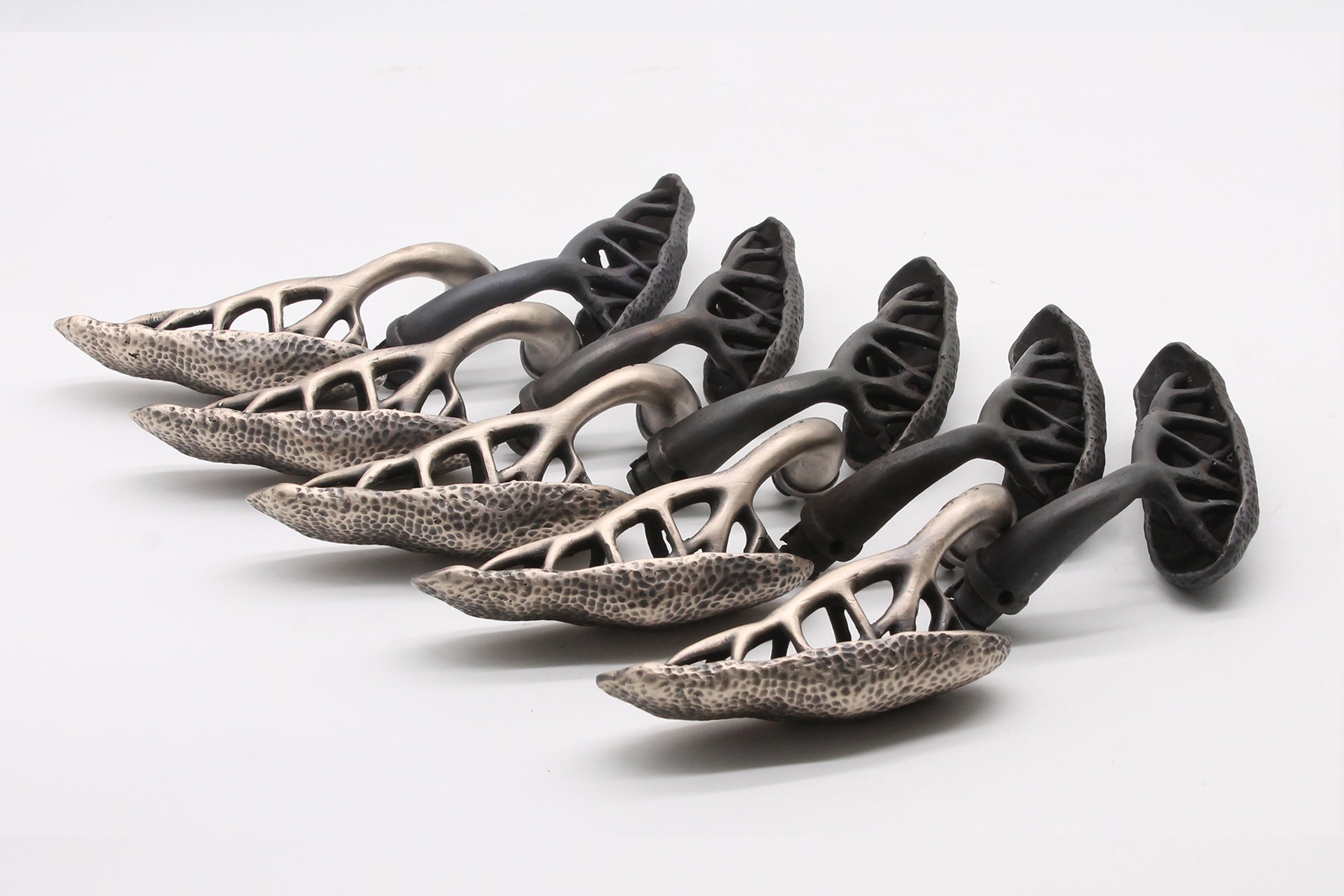
At a larger scale, the organic lines of the bronze Morphic entry door handle, finished in a dark patina, transform a quiet cedar surface into a bold architectural focal point. The contrast of the soft bronze contours against the striated wood creates a powerful yet understated entry statement.
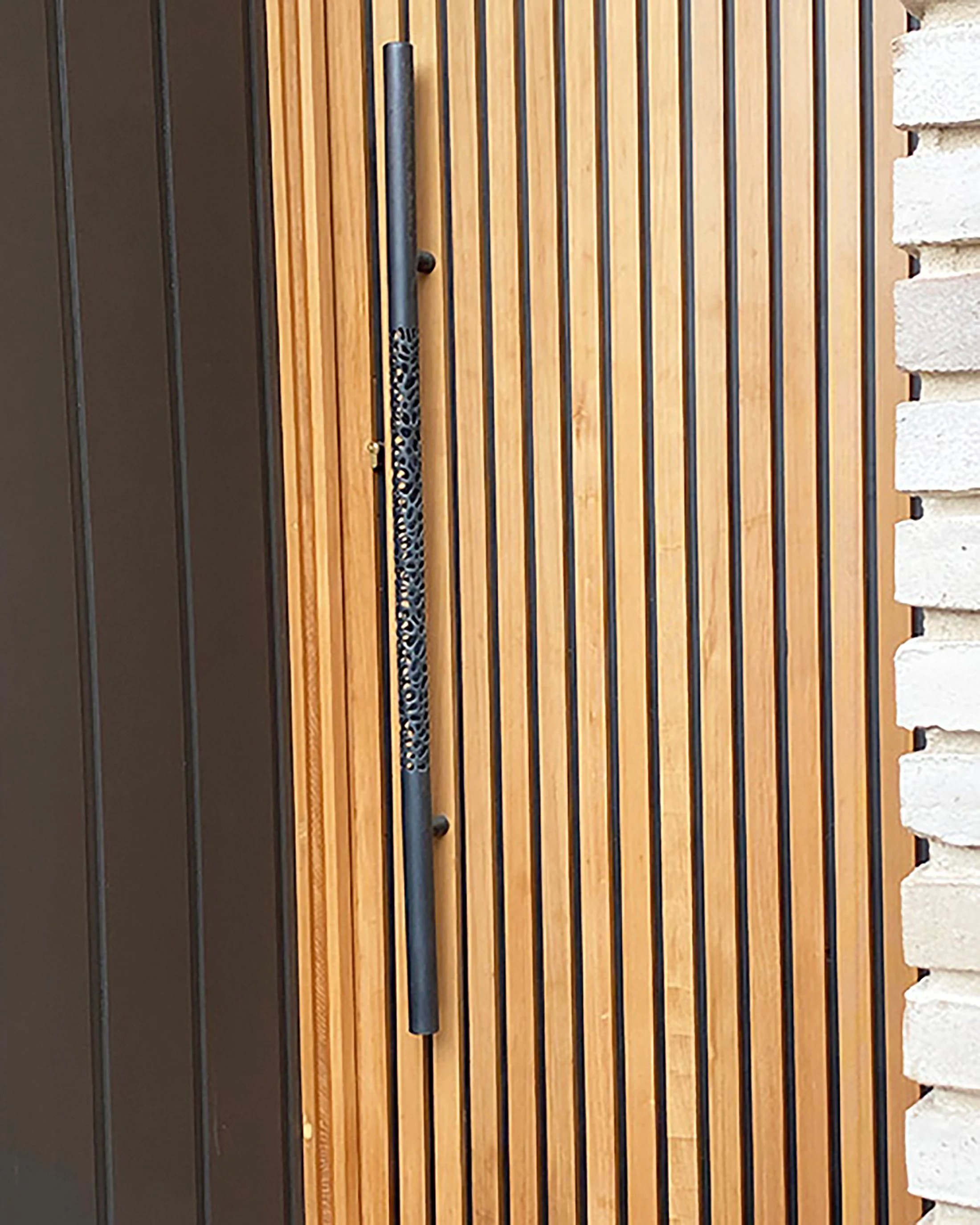
-Morphic bronze entry handle commissioned by Andrew Bald for his Coogee, Australia residence. Photo credit: Andrew Bald.
The Process Explained
Applying hot patinas combines chemistry with artistry.
A blow torch raises the bronze surface temperature to approximately 200°F, causing the metal to expand and its surface pores to open. This increased surface energy allows the chemical solution to penetrate more deeply and bond more effectively than it would on cold metal.
The green, red, and brown vine leaf patinas were created using cupric and ferric nitrates dissolved in distilled water and applied by brush to specific areas of the pull. As heat is applied, the water evaporates instantly and the nitrates react with the copper in the bronze, forming colored oxides or patinas. The result is a richly layered surface that is both chemically bonded and artistically controlled.
This armoire was created for a friend’s 600 square foot cabin, with an even smaller 120 square foot bedroom — proof that scale and presence are not determined by square footage, but by thoughtful design.
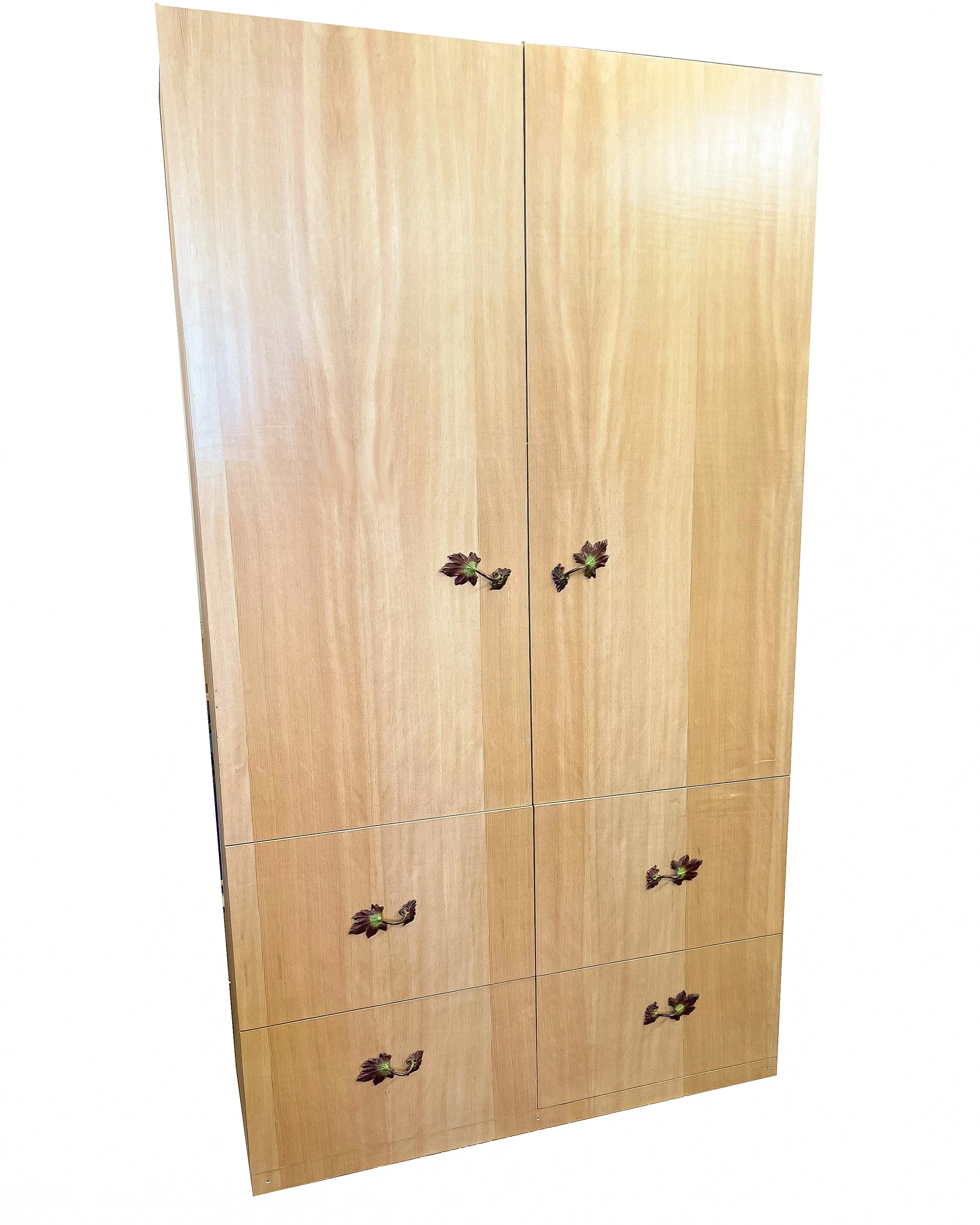
Douglas fir armoire fitted with sculptural bronze vine cabinet pulls finished in layered red and green hot patina